
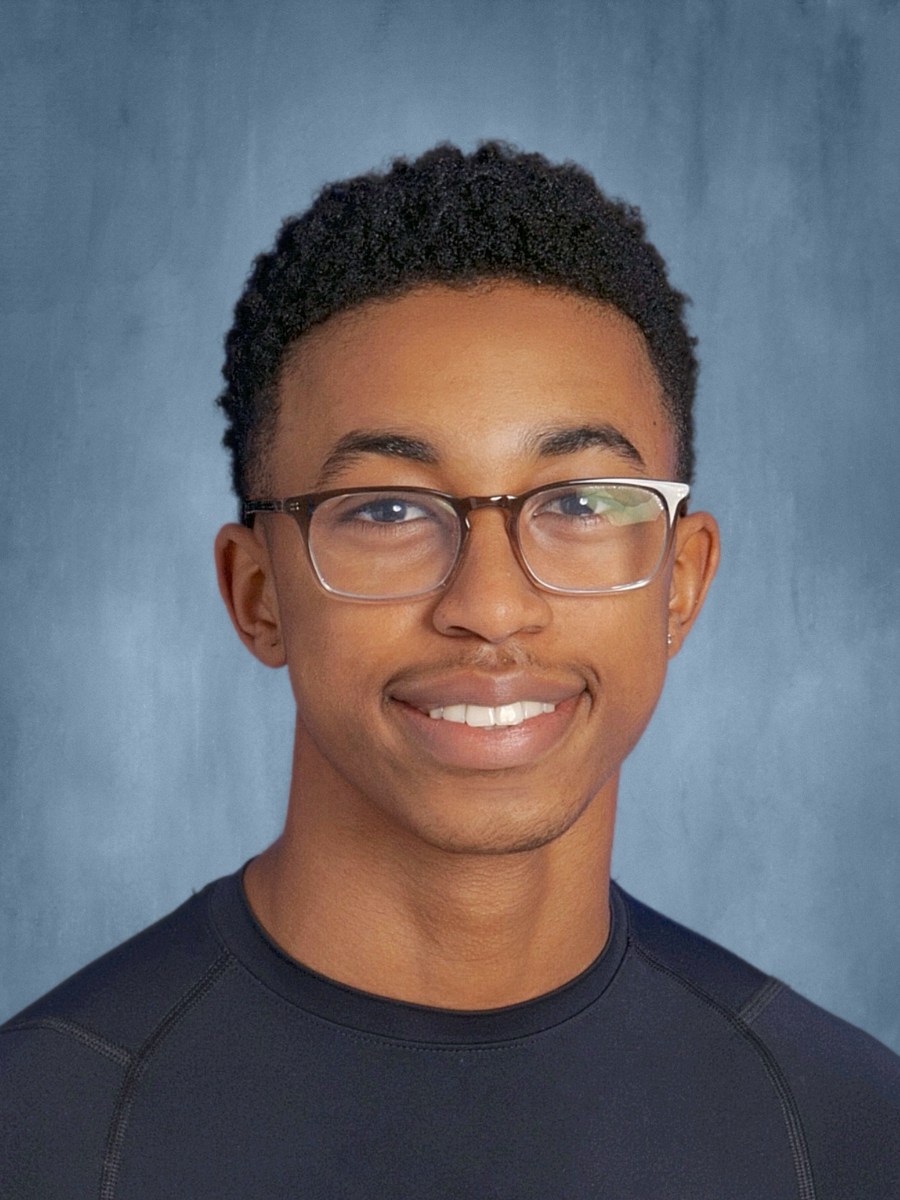
 By Kingston Fuller
IB Cohort Senior, Benjamin Banneker Academic High School (Washington, DC)
In every class, I was always asked that simple question. At first, it felt tedious to explain myself constantly, but I soon realized what the teachers around me were doing. They pushed my thinking, even if it was just a bit. They allowed me to explore my own thoughts, to dive into my curiosities. Their probing led me to more than answers to a test question and bubbles on Scantron sheets. Because of them, I learned to understand, learned to really think, even when the process made me uncomfortable.
What fosters this environment of curiosity and deep learning is the dedication of teachers and their intentional curricula. Even when our classes are centered around passing international exams, I’ve felt teachers branch beyond those limits, daring to teach us beyond our books. I think of my history class, especially when I sometimes feel detached learning about events of the past that feel distant from the present. But my history teacher brought interest into the curriculum when we were learning about authoritarian regimes, and how we can see parallels in today’s American events. From book banning to rhetoric and propaganda, the connections my teacher made created an environment where the past felt so real, so tangible, and so fascinating.
Our upbringings, identities, and communities affect how we view the world, and coming together with people vastly different from myself allows me to consider perspectives I’d never thought of on my own.
 But the strength of our classroom truly lies in its diversity, with a uniqueness rooted in the nation’s capital. In times so divided and charged, it can seem like there’s no opportunity for togetherness, for harmony. Yet, spending time inside classrooms with people from all backgrounds and sharing jokes at lunch tables with perspectives from across the globe, I get to see and experience the beauty of diversity. From D.C. natives to first-generation immigrants, we all get to share our experiences and listen to the stories of others. Having this range of people isn’t just important for pictures or website factoids; diversity means we get to have meaningful conversations. Our upbringings, identities, and communities affect how we view the world, and coming together with people vastly different from myself allows me to consider perspectives I’d never thought of on my own.
That exchange isn’t limited to the walls of our classrooms. With a hefty requirement for community service hours—270 to be exact—we spend a lot of time in the heart of the city, making changes for a better future. Through the community service program, I was able to embark on and contribute to a project that focused on health outcomes in communities of color in our city. From raising funds to organizing events, I learned about how to turn my ideas into actionable steps. The lessons community service taught me were invaluable, and continue to further my passion for advocacy.
Opportunities outside of school aren’t limited to community service, and during my time at Banneker, I’ve taken advantage of many. During freshman year, I was curious about every opportunity presented to me, and decided to push myself to try a program called Poetry Out Loud. At first, as an English assignment, we had to recite a poem from memory, learning to imbue the work’s meaning into our mannerisms and use body language to tell a story. I found interest in the competition, performing time after time in front of the mirror, in front of the school, and eventually in front of judges. The following year, as part of our D.C. History class, we got to write a speech about something that interested us, and I chose to explore the impact of social media on teens and their self-image. With the help of my teacher, I spent hours researching, refining, and learning how to convince and appeal to different audiences. I finalized my script, performed it in front of hundreds of faces, and eventually, after being chosen as a Mainstage Speaker, in front of thousands. Those experiences taught me a lesson no classroom could: how to use the power of my voice.
Going to a magnet school isn’t easy. It requires hard work, dedication, time management, and a constant commitment to excellence. But what shines aren’t the challenges, but the lessons learned. Going to a magnet school has taught me what it takes not just to be a successful student, but a successful human. And to me, that means being knowledgeable, open-minded, dedicated, creative, and most of all, curious.




4005 Wisconsin Avenue NW #5997
Washington, DC 20016
202.824.0672