Governor Ivey said she wants the state's cybersecurity sector to be as robust and well-regarded as its aerospace program. She plans to achieve that goal with the formation of the Alabama School of Cyber-Technology and Engineering, which will be based in Huntsville -home of the Marshall Space Flight Center.
North Carolina is one of the national leaders in a school movement that since the 1970s has promoted diversity and educational choices for families, according to a new study on magnet schools. The study by UNC-Charlotte’s Urban Institute found there are 4,340 magnet schools in the U.S., and North Carolina has the sixth-most of any state at 263 schools.
Todd Mann, executive director of Magnet Schools of America, the national trade organization that commissioned the study, said North Carolina ranks even higher if you consider the quality of the state’s magnet schools.
This month, we had the opportunity to talk with Jillian Schulte, Magnet Coordinator and 21st Century Learning Specialist for the Kenwood Leadership Academy, which is part of the Cedar Rapids Community School District in Iowa. The purpose of the conversation was to learn about the district’s new leadership magnet school that is based on Steven Covey’s Leader in Me program.
"It's a hidden treasure," said the school's principal, Bradford Mattair, in full agreement with our assessment. The school sits in the heart of Broward County, but it's in a quiet residential neighborhood, a bit off the beaten path. The performing arts community, however, knows all about Parkway Middle.
"Chicago Public Schools students are leading the country in academic gains, and these new STEM Magnet and classical schools will help continue to grow that record progress," Mayor Rahm Emanuel said.
The new magnet programs at Belaire High and their feeder schools are part of a big expansion of the school system's popular magnet program. The School Board has approved eight new magnet programs since May, bringing the number of schools with such specialized offerings up to 25.
"It's been huge," said Caroline Sharp, Oliver Magnet school drama teacher. "It's been a game changer because we started in a little portable with 25 kids. The next year we applied for a Disney grant and got it, and it changed everything. We had 150 kids try out that year! It has been like that ever since."

There are now about 4,340 magnet schools in the U.S. — more than ever before, according to a new “snapshot” from the nonprofit Magnet Schools of America. Those schools, which are public and offer theme-based curricula like STEM, art or music, educate one out of every 15 public school students in the U.S.
"What do you want to be when you grow up?" may be one of the most common questions asked of children. Magnet programs have emerged as a popular way to help them figure it out.
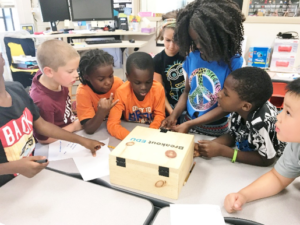
Using the school's focus on science, technology, engineering, arts and math across the curriculum, students employed engineering and scientific tools - defining the problem, asking questions and doing research - to determine the symptoms and remedy for a fictitious, mysterious disease that made students, teachers and staff sick.





4005 Wisconsin Avenue NW #5997
Washington, DC 20016
202.824.0672